·Updated ·Mergestorm Team·Engineering
CI/CD Pipeline Best Practices for Modern Development Teams
Build a faster, more reliable CI/CD pipeline with these proven best practices. Learn how automated code review fits into continuous integration and why every push deserves instant feedback.
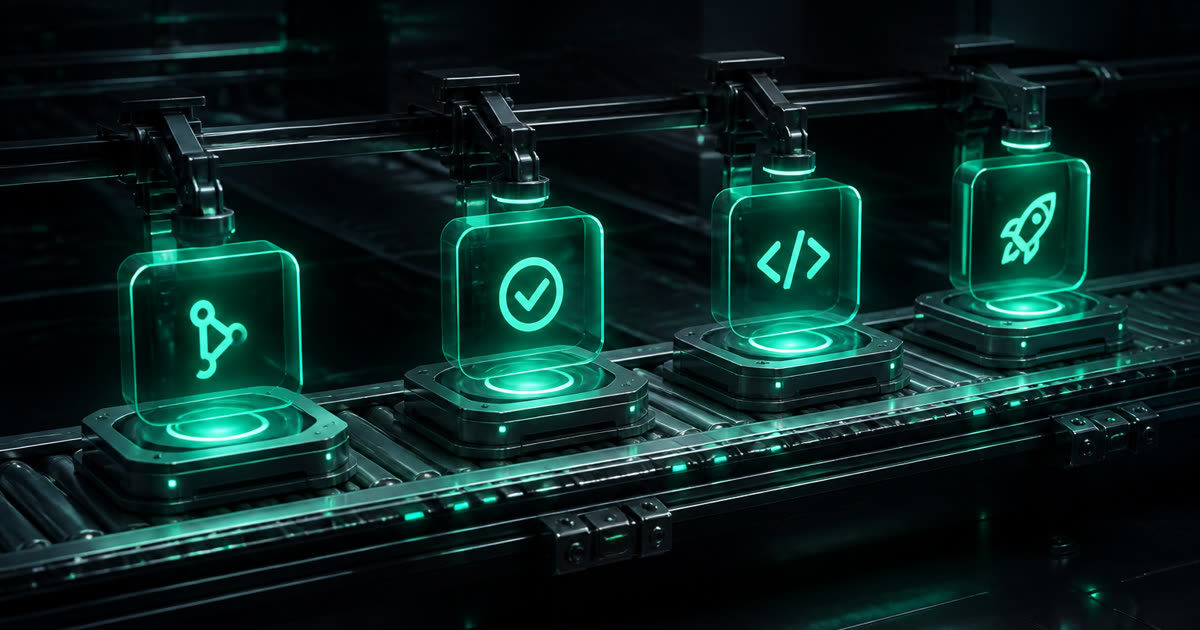
A good CI/CD pipeline turns every commit into quick, trustworthy feedback. A bad one becomes background noise. Slow builds pile up. Flaky tests teach people to ignore red. Deploys stop feeling safe.
This guide covers practices that separate pipelines teams rely on from pipelines they ignore.
Why CI/CD still matters
Continuous integration and delivery give you fast feedback on every commit. Issues get caught before users see them. A green pipeline means you can ship with confidence. Less firefighting, more building.
The number to watch is feedback cycle time: push to answer on whether the change is safe.
Best practice 1: Keep the pipeline fast
If a build takes thirty minutes, people batch commits and you lose the point of CI.
Parallelize. Run lint, typecheck, and tests concurrently when you can.
Cache dependencies. node_modules, Go modules, pip caches: caching often saves minutes per run.
Test only what changed. Turborepo, Nx, and Bazel help monorepos skip unrelated work.
Split fast and slow tests. Unit tests on every commit. Heavier integration tests on PRs or pre-merge.
Best practice 2: Put code review inside the pipeline
Review is often treated as a separate step after CI goes green. Stronger teams run automated review alongside tests.
Mergestorm reviews every push next to your existing checks. It flags logic errors and anti-patterns. Style debates shrink. Common security smells get caught before production.
Example shape (Mergestorm itself runs via GitHub check runs; no extra YAML required for the review step):
# Example CI workflow with Mergestorm
name: CI
on: [pull_request]
jobs:
  test:
    runs-on: ubuntu-latest
    steps:
      - uses: actions/checkout@v4
      - run: npm ci
      - run: npm test
      - run: npm run build

  code-review:
    runs-on: ubuntu-latest
    steps:
      - uses: actions/checkout@v4
      # Mergestorm reviews every push automatically
      # via GitHub check runs; no YAML needed
Developers get inline comments on the PR without opening another tool.
Best practice 3: Keep the pipeline reliable
A flaky pipeline is worse than none. People learn to ignore red builds.
Fix flaky tests immediately. One intermittent failure poisons trust in everything else.
Pin dependencies. Lockfiles and pinned runner images reduce "works on my machine" in CI.
Use staging. Mirror production before you ship to prod.
Watch pipeline health. Track duration, failure rate, and flake count over time.
Best practice 4: Automate manual gates
Manual approval steps add delay and inconsistency. Automate versioning from commit messages. Generate changelogs from conventional commits. Roll back failed deploys automatically. Let Mergestorm handle first-pass review so humans focus on architecture.
Measuring pipeline health
| Metric | Target | Why it matters |
|---|---|---|
| Build time | < 10 minutes | Keeps developers in flow |
| Failure rate | < 5% | Stable signal |
| Time to deploy | < 30 minutes | Faster iteration |
| Review turnaround | < 2 hours | Avoids queue stalls |
Summary
Fast, reliable pipelines make shipping boring in a good way. Adding AI review with Mergestorm gives you another quality gate without adding minutes to build time.
Ready to try it? Start with Mergestorm on your existing GitHub workflow.